Farewell to barcodes: why 2027 changes everything for your packaging
For decades, the EAN-13 barcode has been the invisible backbone of modern commerce. It has done its job perfectly: identifying a product at checkout, quickly and unambiguously. But that standard has now reached a structural limit.
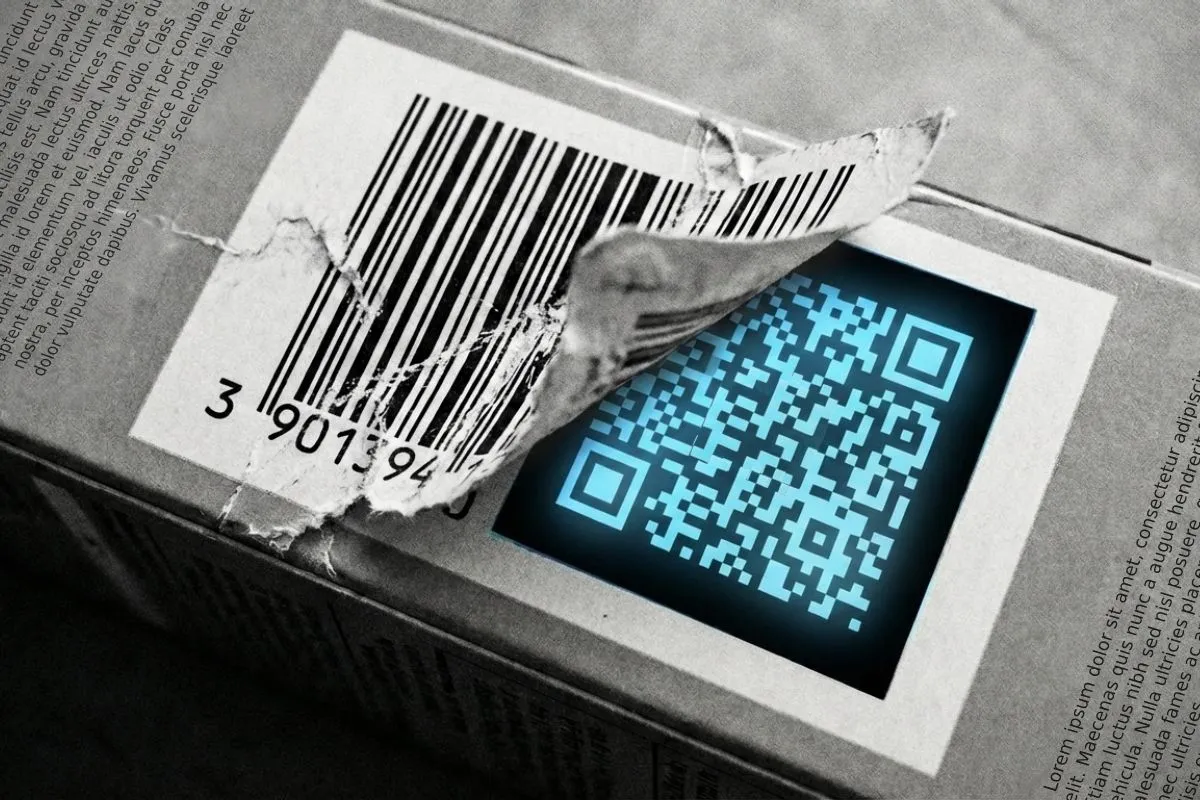
By 2027, all players in global retail have committed to a major shift: checkout systems must be able to read 2D codes, especially the GS1 QR code (also called GS1 Digital Link). This movement is not a hypothesis or a media effect. It is already underway.
Carrefour has started transforming more than 8,000 private-label references. L'Oreal plans to evolve 22,000 products worldwide. Behind these leaders, the entire ecosystem is aligning.
The question is therefore no longer if the barcode will evolve, but how each brand will manage that transition and, above all, what it will do with it.
The real problem with the EAN-13 barcode
The traditional barcode is not broken, it is limited by design. It contains only one piece of information, the GTIN, the product identifier essential for logistics and checkout.
But packaging today must respond to much broader needs:
- Product transparency and traceability
- Regulatory information (AGEC, recyclability, origin)
- Consumer engagement and reassurance
- Shelf differentiation
- Marketing activation and data collection
Yet the EAN-13 code is static, silent, and closed. It allows no updates, no dialogue, and no usage measurement. At a time when consumers scan, compare, and verify within seconds, that silence becomes a handicap.
GS1 Digital Link QR code: a new standard, not a gadget
The GS1 QR code is not a classic marketing QR code added to a pack. It is an industrial standard designed to succeed EAN-13.
Technically, it is a structured URL that follows GS1 syntax and embeds the GTIN, just like the current barcode, while adding a digital layer.
Example structure:
https://id.brand.com/01/GTIN/21/SERIAL
- 01: GS1 identifier for the GTIN
- 21: serial number or unit-level data
This QR code can be read twice, in two different ways:
- At checkout, by a scanner, for product identification and price
- By a smartphone, to open a digital experience
That dual readability changes everything.
The key role of the resolver: intelligence behind the code
The GS1 QR code does not simply contain a URL. It relies on a resolver, a system that directs users to the right information depending on context.
- The checkout system extracts only the data required for payment
- The consumer's smartphone accesses a dedicated page: product origin, recycling, usage guidance, brand content, offers
In other words, one code on the packaging, multiple uses, multiple audiences.
That is precisely where packaging stops being a simple container and becomes an interactive media channel.
Anticipate now or suffer later
A packaging change is never decided at the last minute. Between design, internal validation, inventory, industrial timing, and distribution, 18 months are often required.
Waiting until 2026 means taking three major risks:
- Industrial bottlenecks because everyone changes at the same time
- GS1 compliance errors
- A visible competitive delay on the shelf
On the other hand, brands that plan ahead can integrate this transition into their natural pack redesign cycles and turn a technical constraint into a strategic advantage.
How to implement a GS1 QR code effectively
Project success depends less on the technology than on the organization.
The first step is to identify the products whose packaging will change soon or whose lifecycle justifies an update.
Next comes code design. Compliance with GS1 Qualicode is essential: minimum size (2 x 2 cm), strong contrast, and sufficient quiet zones. A poorly designed QR code can disrupt checkout scanning.
Finally, the Call To Action makes all the difference. A QR code without a promise remains invisible. By contrast, a clear invitation like "Scan for origin and recycling information" or "Scan to know everything about this product" turns the act of scanning into a reflex.
Immediate business benefits
Beyond 2027 compliance, the GS1 QR code unlocks very concrete gains.
First, it enables radical space optimization. One single code can replace the barcode, printed URLs, explanatory pictograms, and long mentions.
It also strengthens consumer trust by giving access to reliable, up-to-date, and verifiable information in direct response to regulatory and societal expectations.
Finally, it brings unprecedented marketing agility. The content accessible through the QR code is dynamic: a promotion, a video, or a message can change without ever reprinting the packaging.
The pack becomes a live, measurable, and manageable channel.
Why QRanberi simplifies this transition
The complexity of the GS1 Digital Link standard still slows many companies down. Syntax, compliance, redirection management, content creation: without the right tool, the risk of error is real.
QRanberi was designed to remove those barriers.
The platform makes it possible to generate GS1-compliant QR codes without technical expertise, to centralize redirections, and to create mobile-first engagement pages truly adapted to the context of scanning in-store.
It also provides a clear view of usage: who scans, where, and when. Those insights are precious for managing packaging performance.
Conclusion: packaging is entering a new era
Moving from barcode to GS1 QR code is not a simple graphic change. It is a change of model.
In 2027, packaging will no longer be a passive medium. It will be a touchpoint, a transparency tool, a marketing lever, and a strategic asset.
Brands that prepare today will gain a head start. The others will go through the transition reactively.
The good news is that this transformation is accessible, controllable, and value-creating, provided it is handled with the right support.